A lab on chromatography is important to AP Chemistry because chromatography illustrates how compounds
can be separated and gives practice in theoretical consideration of polar interactions. This lab
provides 5 solvents & 1 compound mixture to students, from which they can create a procedure
involving chromatographing with at least two solvents.
The lab we modified can be found in the College Board's AP 2014 Chemistry Lab Manual, AP Chemistry
Guided Inquiry Experiments: Applying the Science Practices. The lab is labeled as "Investigation
5 – Sticky Question: How Do You Separate molecules That Are Attracted to One Another?"
We replaced the hexane/petroleum ether with heptane/ethyl acetate, because these chemicals are safer to
human health & the environment. We're also adding a 6th solvent:
isopropanol/H2O. The professor prepares these solvent mixtures before class, & we did
research to find the most effective mixture ratios between heptane & ethyl acetate, as well as
another solvent we are adding (isopropanol/H2O). The most effective ratio is the one which
shows the best separation. Finally, we tested additional compounds to be chromatographed: spinach &
marker ink. The reason for this is that the food dyes of the provided lab do not easily breakdown in the
environment.
Balanced chemical reactions will be outlined in the discussion of our research.
Materials
10 mason jars used as development chambers
pencil
metric ruler
labels
lab filter paper to make 40 plates (we cut 25 x 75 mm plates from ~6×6" round sheets)
aluminum foil
black sharpie marker
spinach
10 ml ethanol
37.5 ml heptane
37.5 ml ethyl acetate
37.5 ml isopropanol
37.5 ml H2O
Methods
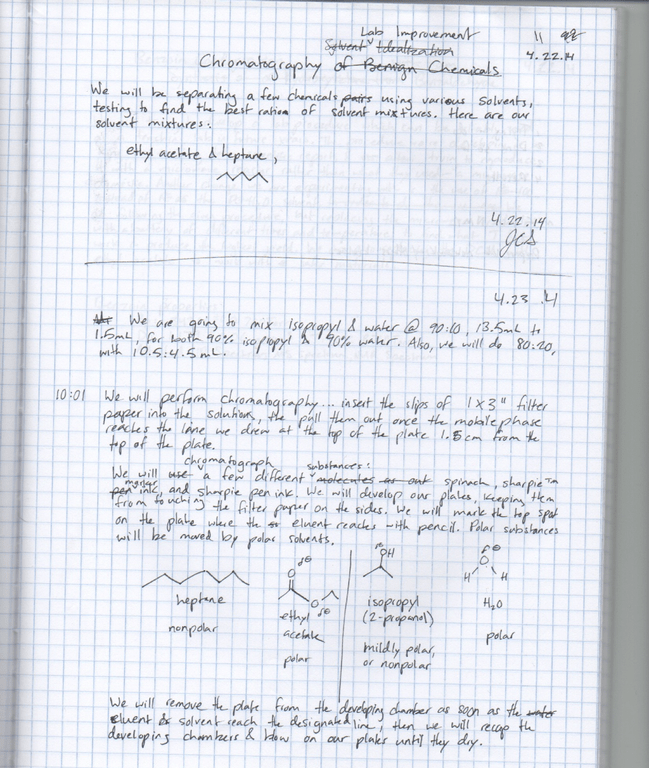
Create 10 development chambers; prepare 15 ml mixtures of 90:10, 80:20, & 50:50 heptane/ethyl
acetate & H2O/isopropanol, where there are mixtures including the majority chemical of
both chemicals included in the mixture (there will be a 90% heptane chamber, as well as a 10% heptane
chamber).
Prepare spinach/ethanol mixture for spotting the spinach. Crush 2 spinach leaves into a beaker with
solvent that evaporates quickly (we used ethanol).
Using glass capillary tubes from a digimelt device, spot the plates. Touch the tube to the surface
of the spinach solution, then briefly touch the plate, making sure the spot location is above the line
which the plate will be drenched in when inserted into the chamber.
Allow evaporative solvent to dry off of the plate.
Line sides of chambers with filter paper, making sure the height of the filter paper is great enough
to keep the plates from touching them when inserted into the chamber. We cut 2 inch filter paper
linings.
Seal container with aluminum foil. Allow to sit for 2 hours before chromatographing. This allows the
solvent to evenly evaporate throughout the chamber.
Place plate into the solvent, then watch until solvent reaches a line approximately 1 cm from the
top of the plate.
Remove plate and allow solvent to evaporate off.
Measure distance from original spot to each distinct moved spot as well as the distances between
these spots.
Expected Outcome
Our expected outcome is that the compounds we separated will be just as effectively separated by our
solvents. We predict that 50 % heptane/ethyl acetate will yiled the best separation for spinach &
ink.
Results
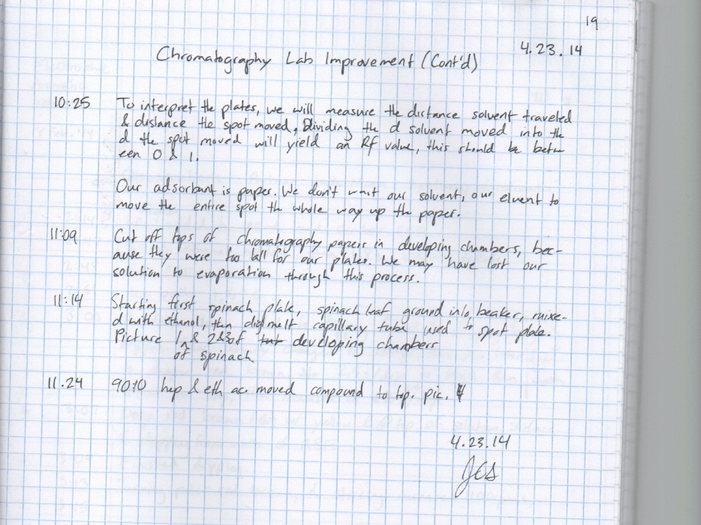
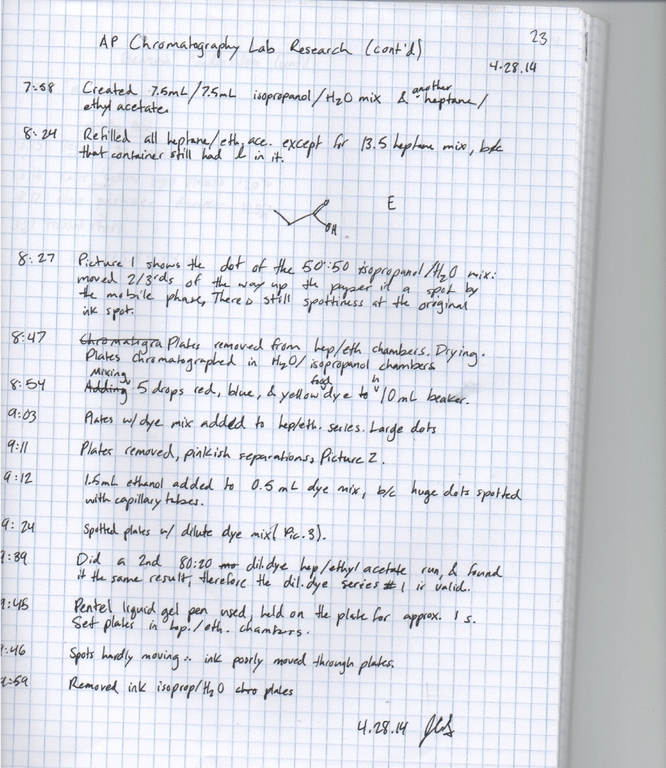
We created two series of development chambers. One set contained ethyl acetate and heptane mix and the
other contained water and isopropanol. Each series contained five chambers which differed in solution
ratios (9:1, 8:2, 5:5, 2:8, 1:9).
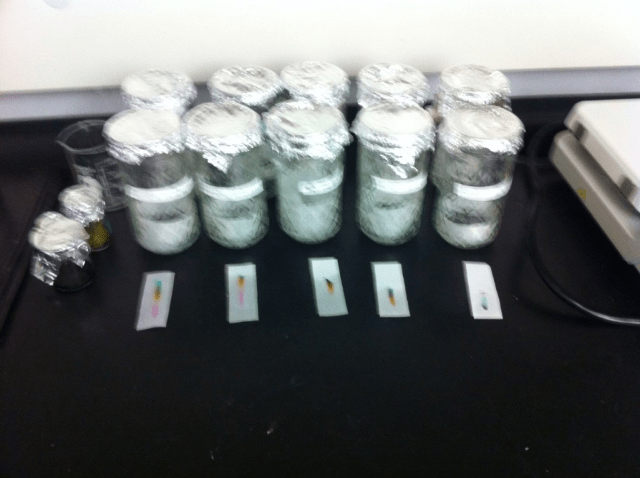
Figure 1. Setup of two series of five development chambers, waste container and spinach
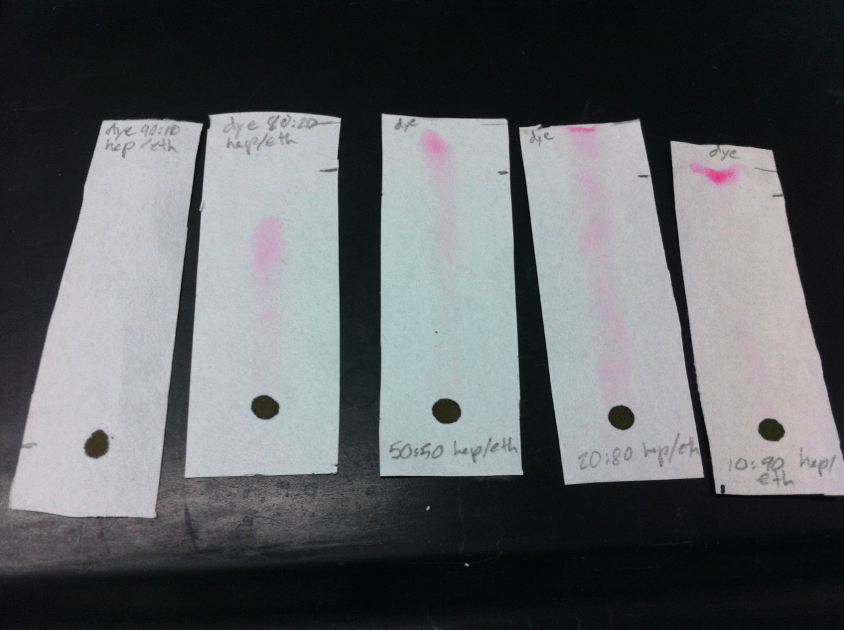
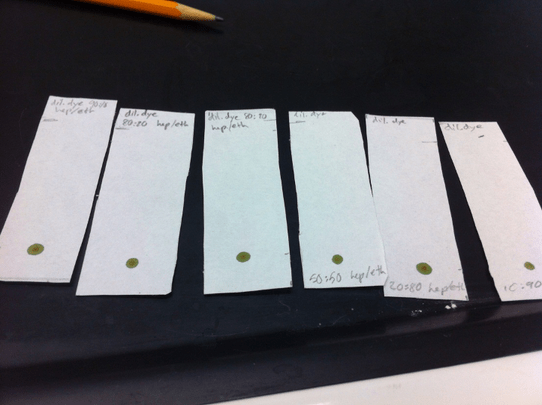
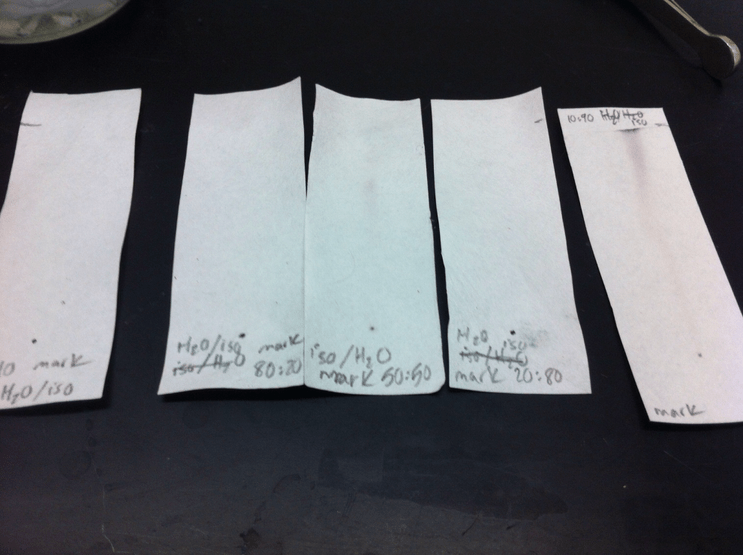
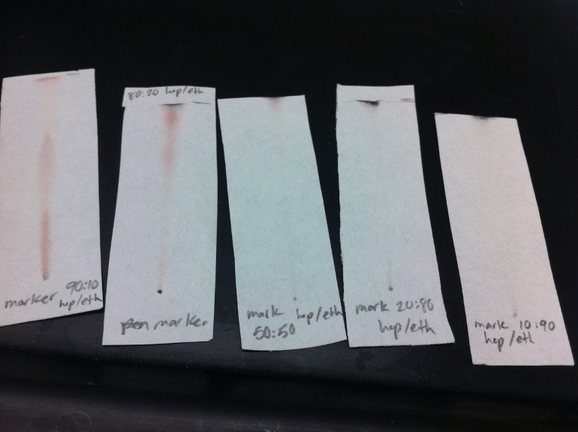
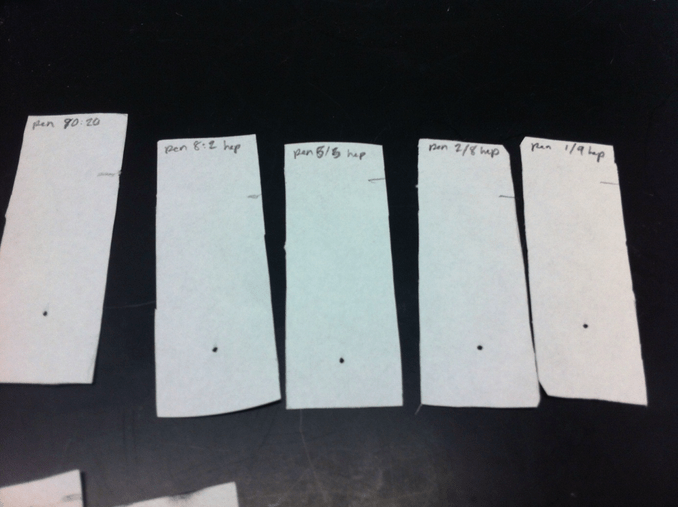
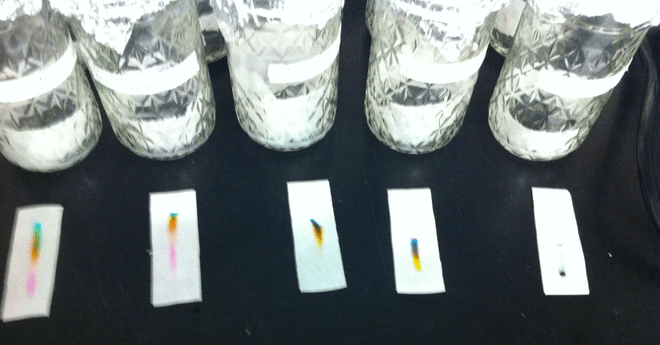
solution container on left, three dye mixture chromatographs in front.Figure 2. Sharpie marker chromatographs.Figure 3. Dye mixture diluted in ethanol chromatographs.Figure 4. Black ink marker chromatographs.Figure 5. Marker chromatographs.Figure 6. Sharpie pen chromatographs.Figure 7. Red, blue, and yellow dye mixture chromatographs. Left to right isopropanol to
water ratios: 9-1, 8-2, 5-5, 2-8, 9-1.
Annotated Bibliography
AP Chemistry Guided Inquiry Experiments: Applying the Science Practices. CollegeBoard. 2013. Print.
We used an article from this manual, investigation 5, as the lab which we worked to improve.
Levy, Irv. Conversation. 2014, Wenham.
Cannon, Amy. Interviewed by AP Lab Cohort 2014. 2014, Wenham.
Critiques
The filter paper strips needed to be cut by hand. They also took a decent amount of the lab time
that could have been used on performing experiments. The amount of strips needed ended up being quite
a considerable amount.
The dotting of the paper is a delicate task. Multiple batches of chromatography batches were messed
up due to either putting too much material on the paper, or too little.
The material being analyzed by the chromatography should not be a material that has unknown
qualities when the solvents and ratios of them are still being tested. Using three distinct primary
colors of food dye mixed together as the material gave us a standard by which we knew when they were
fully separated. The colors were also easier to distinguish.
We should have spent more time analyzing the solvents we used to ensure that they matched the
solvents that are currently used for Chromatography. This would have saved us a lot of initial time;
also, looking into the ratio that is used in a normal chromatography solvent mixture would have saved
time and materials.
When using heptane over hexane, due to hexane being on a danger scale higher than heptane, the user
should still understand that heptane is still hazardous and be careful about inhaling the fumes or
working outside of the hood.
Research team did not give themselves a big enough time window to complete experiments and find a
successful replacement for the widely used chromatography solvent mixture.
The slides came out either streaked, blank or with the entire material moved to the top of the slide
with no separation.
Future work
Strips can be cut outside of the lab and in free time. If a team plans to cut their own strips they
should be generous with the amount of strips they predict they will need and cut them outside of the
lab at their own leisure.
Future teams should ensure that they know which solvents would theoretically work best and
understand why. They should also have an idea of what ratio should work best theoretically.
When creating slides, they should practice first by performing an actual chromatography with the
usual solvent mixture, so that they can master how the procedure should work. They should be familiar
with how the dots look separated from each other, when to pull the plates, how to measure the Rf
values, and just how much material should be dotted onto the plate for the best separation and
results. This will greatly assist with the corrections being made to the experiment procedure and save
a lot of initial time by narrowing down which problems need to be focused on.
Teams should label both the containment chambers and label the plates with which solvent mixture was
used to develop it. Labeling the plates allows the team to come back to them later and analyze which
could be further developed into.
Team should spend first visit to lab ensuring that everything is in place and ready to go; solvents
are on hand, containment chambers are clean and labeled, materials to be chromatographed are accounted
for, plates are cut and that the tools needed are available. This will set them up to fly through
experiments on their next visit.